
A massive new wave of inflation will be led by oil and food prices soaring.

All Bull Markets
March 24 (King World News) – Graddhy out of Sweden: All bull markets go through periods of small and larger pullbacks, no matter how bullish fundamentals look. This because short/intermediate term, the market is not ruled mainly by the very bullish big picture fundamentals, but mostly by short/intermediate term sentiment.
Gold
Ole Hansen, Head of Commodity Strategy at SaxoBank: Gold has returned to its 200-day moving average for the first time since 2023, as the Middle East conflict triggers a broad macro shock and forces a repricing across global asset markets.
KING WORLD NEWS NOTE: Gold Rebounded Strongly Off Its 200-Day Moving Average
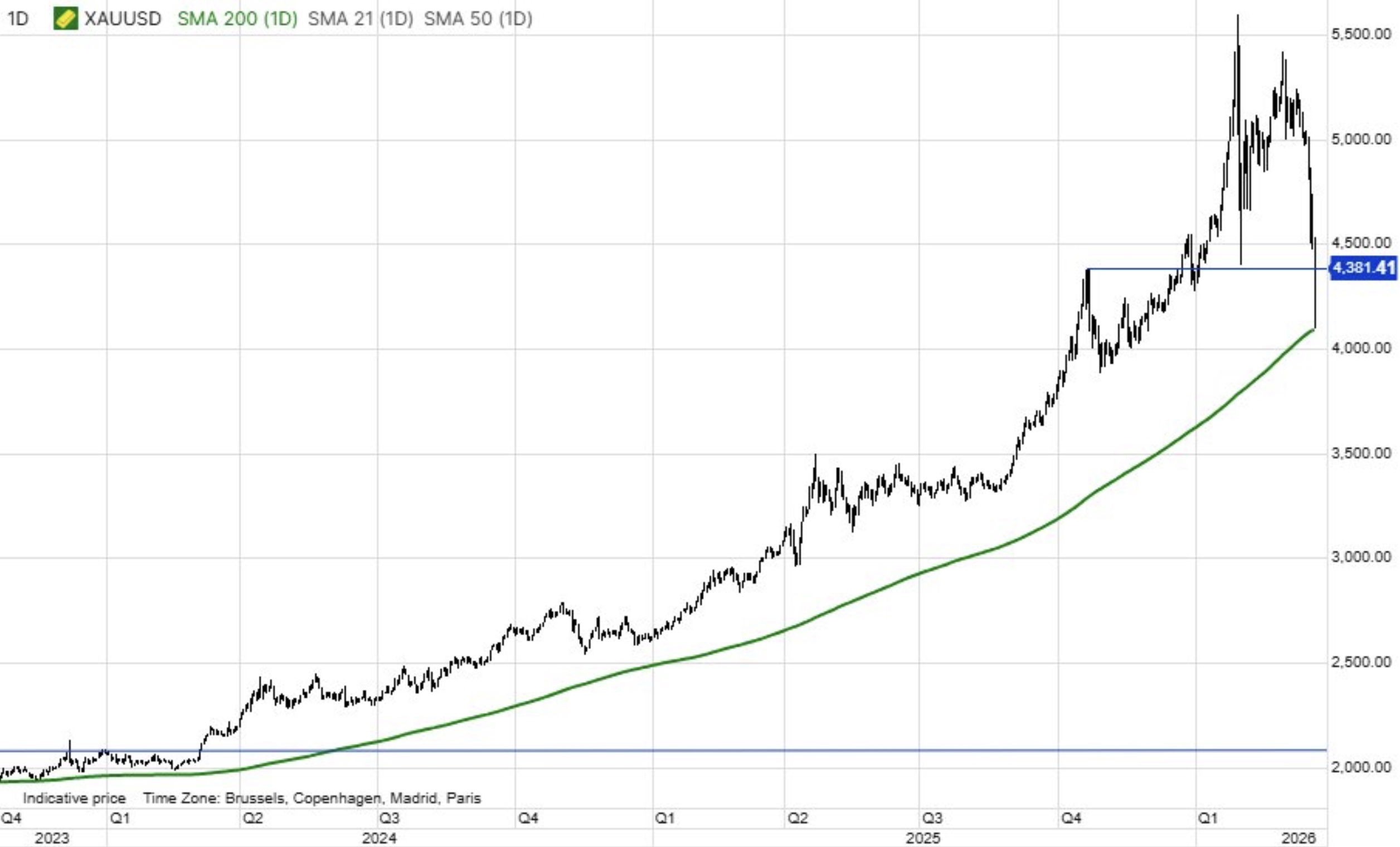
In this environment, gold has emerged as one of the more exposed assets, driven by a combination of long liquidation, and now also stop-loss selling, and investors raising liquidity—partly through gold sales.
Once the dust settles and the current wave of selling runs its course, gold is likely to stage a strong rebound.
Fertilizer Prices Spike
Charlie Bilello: Fertilizer prices have moved up to their highest levels since September 2022, rising 44% YoY.
KING WORLD NEWS NOTE: Fertilizer Prices Highest Since 2022!
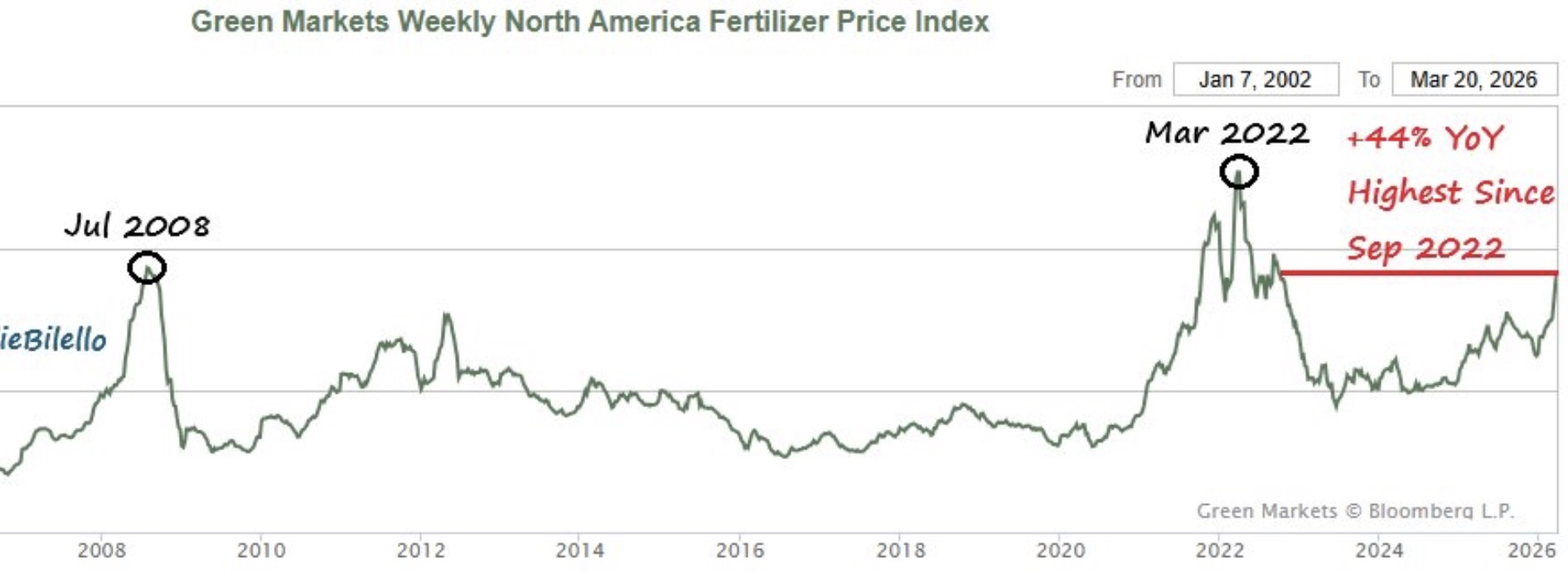
About a third of global fertilizer supply passes through the Strait of Hormuz.
This will drive food price inflation higher in the coming weeks/months.
Crude Oil & Food
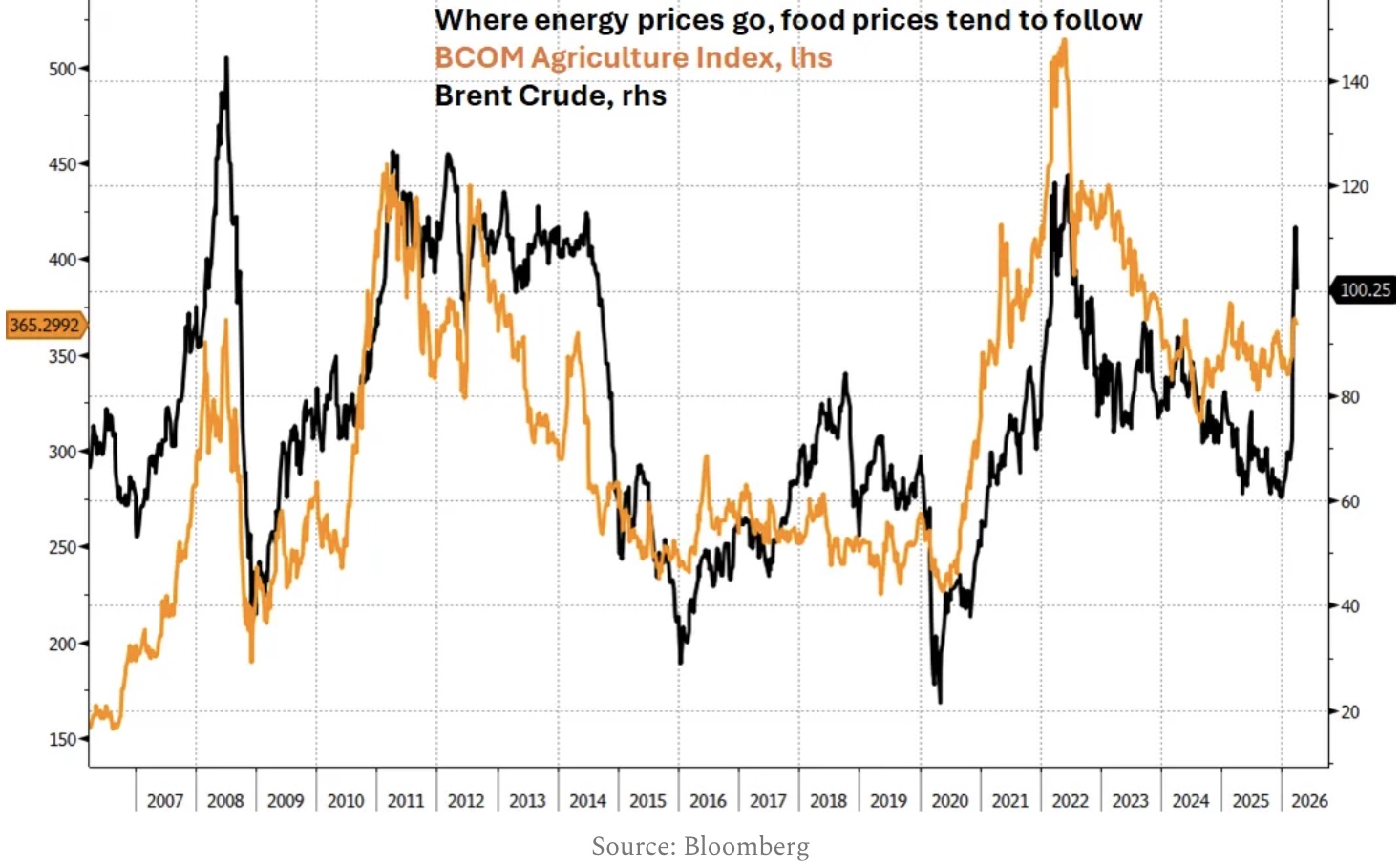
Ole Hansen, Head of Commodity Strategy at SaxoBank: What began as a disruption to crude and fuel flows is increasingly morphing into a broader threat to global food production. With exports of ammonia and urea from the Gulf grinding to a halt amid the closure of the Strait of Hormuz, attention is shifting to one of the most critical inputs in modern agriculture: nitrogen fertilizer. The risk is no longer limited to higher energy prices—it now extends to farm economics, crop yields and, ultimately, food prices.
KING WORLD NEWS NOTE: Where Energy Price Go (BLACK LINE), Food Prices Tend To Follow (ORANGE LINE)
The Middle East plays a pivotal role in global fertilizer markets for a simple reason: natural gas. Ammonia, the building block for most nitrogen fertilizers including urea, is produced using gas as its primary feedstock. Access to abundant and relatively low-cost gas has allowed Gulf producers to become dominant exporters, accounting for nearly half of global urea trade and around a third of ammonia exports. Any disruption to this flow therefore has global consequences, particularly at a time when supply chains are already strained.
Nitrogen is not a marginal input—it is a cornerstone of high-yield agriculture. Crops such as wheat, corn, rice, cotton, canola and sugarcane are all heavily dependent on fertilizer application to achieve optimal yields. When supply becomes uncertain or prices surge, farmers are forced to adjust. That typically means reducing application rates, switching crops, or in more severe cases, cutting planted acreage. Each of these responses carries negative implications for production.
The transmission mechanism is multi-layered. First, fertilizer availability is tightening as exports are disrupted. Second, prices are rising sharply, driven by higher natural gas costs and logistical bottlenecks. Third, diesel and transportation costs are surging, increasing the expense of everything from planting and irrigation to harvesting and distribution. Taken together, these pressures are squeezing farm margins globally.
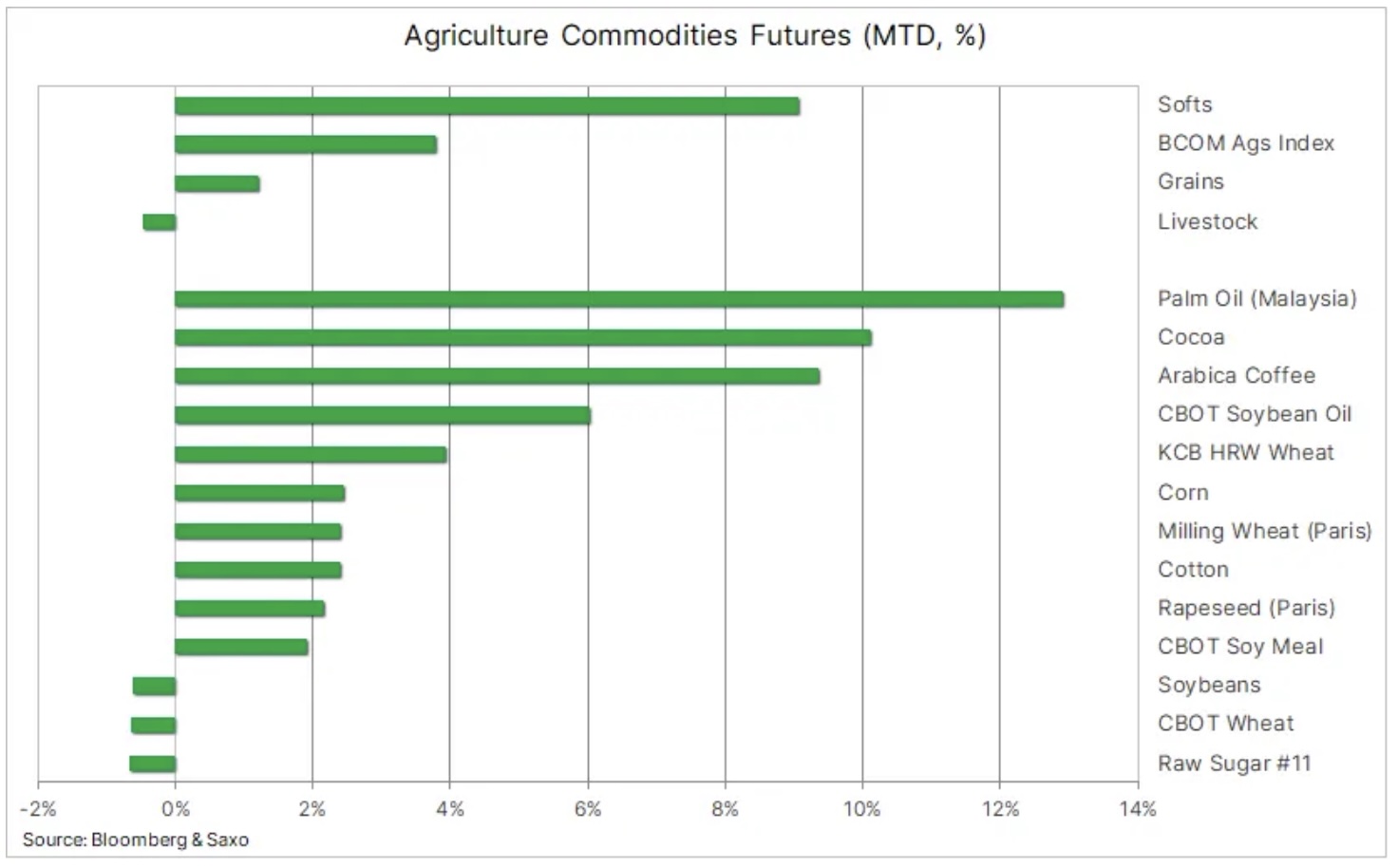
Australia provides a clear early example of how this dynamic is unfolding. Wheat farmers, among the world’s most important exporters, are reportedly paring back plantings due to concerns over fertilizer availability and cost. This highlights how quickly a regional supply shock can translate into global production risks. The impact begins not at harvest, but at the point where farmers make decisions about inputs and acreage.
Market pricing is beginning to reflect these developments, albeit selectively. Edible oils have led the move higher, with palm oil and soybean oil posting strong gains, supported by their link to biofuel demand and energy prices. At the same time, drought conditions in parts of the US have added support to HRW wheat and cotton. Cotton is also benefiting from rising costs of fuel-based synthetic fibres, improving its relative competitiveness.
However, the response across agricultural futures remains uneven. Some contracts have yet to fully price the potential for a sustained input shock, suggesting the market is still in the early stages of assessing the broader implications. This is consistent with past episodes where energy-driven cost pressures take time to feed through into food prices.
Historically, there has been a strong relationship between rising energy costs and higher food prices, with oil and natural gas influencing an estimated 64% of food price movements. This reflects the central role of energy across the entire food supply chain, from fertilizer production and field operations to processing, transport and distribution. The current environment reinforces that link but adds an additional layer of risk through physical disruption to supply chains. The Strait of Hormuz is not only a critical energy chokepoint—it is also a key artery for the global fertilizer trade.
The key risk going forward is that what started as an energy shock evolves into a more persistent squeeze on the nitrogen chain underpinning global food production. Should fertilizer shortages persist, the impact will likely broaden from higher costs to lower output, raising the prospect of tighter food supplies and further price pressure in the months ahead.
Here’s What I’m Doing With My Own Money Right Now
To listen to Tavi Costa discuss where we go from here as well as what he is doing with his own money right now by CLICKING HERE OR ON THE IMAGE BELOW.

Gold & Silver Takedown!
To listen to Alasdair Macleod discuss the massive takedown in the gold and silver markets this week as well as what to expect next CLICK HERE OR ON THE IMAGE BELOW.

ALSO RELEASED!
Very Encouraging Trading Today In Gold, Silver & Miners CLICK HERE.
Gold’s Biggest Collapse In 43 Years! Capitulation And Opportunity CLICK HERE.
Worried About The Action In Gold & Silver? Look At This Interview With Tavi Costa! CLICK HERE.
Gold & Silver Takedown Intensifies On Friday But Who Is Selling? CLICK HERE.
This Is Very Bullish For Gold CLICK HERE.
IMPORTANT UPDATE: “I understand that [gold, silver & mining stock] investors are getting a bit more anxious.” CLICK HERE.
Today’s Situation Much Worse Than The 1970s, Why Isn’t Gold Performing As Expected? CLICK HERE.
Look At Who Just Warned This Crisis Is Going To Last More Than A Year CLICK HERE.
BUCKLE UP: Another Wave Of Inflation Is On The Way CLICK HERE.
FORTUNES WILL BE MADE: Look At What Is Getting Ready To Explode On The Upside! CLICK HERE.
SPROTT: This Is Why Gold Futures Continue To Trade Above $5,000 An Ounce CLICK HERE.
Silver: About To Hit A Home Run CLICK HERE.
Nomi Prins Just Warned Oil Price Will Skyrocket Way Above $100 A Barrel CLICK HERE.
Look At What Is Happening Behind The Scenes In The Gold & Silver Markets CLICK HERE.
We Will See Economic Depression, Bail-Ins, Capital Controls & Bank Closures CLICK HERE.
The fate of the global economy is literally down to who blinks first CLICK HERE.
Look At Why Just Said Silver May Spike To $500+ CLICK HERE.
Iran War Impacting Gold & Silver Markets In More Ways Than One CLICK HERE.
© 2026 by King World News®. All Rights Reserved. This material may not be published, broadcast, rewritten, or redistributed. However, linking direc